You've seen the brochures. You've browsed the websites. Maybe you've even attended a virtual info session. But the question lingers: what is the real meaning of a campus tour? If you think it's just a guided walk to see pretty buildings and dorms, you're missing 90% of its value. I've been advising students on college visits for over a decade, and the most common mistake I see is treating the tour as a passive sightseeing trip. It's not. A campus tour is a strategic reconnaissance mission and a gut-check reality test, all rolled into one.
Its true meaning lies in answering the unspoken questions: Can I see myself here at 2 PM on a rainy Tuesday? Do the students look stressed, inspired, or just bored? Does the place feel like a community or a transit hub? This is the data no ranking list can give you.
What You'll Discover in This Guide
- Beyond the Brochure: The Unspoken Goals
- How to Prepare for a Campus Tour (The Right Way)
- What to Look For on Your Campus Tour: A Checklist
- Questions to Ask That Go Beyond the Script
- Common Campus Tour Mistakes (And How to Avoid Them)
- When You Can't Visit: Finding Meaning in Virtual Tours
- Your Campus Tour Questions Answered
Beyond the Brochure: The Unspoken Goals
Let's cut through the marketing. The official goal of a campus tour is to showcase the university. Your goal should be different.
Goal 1: Assess Your Personal Fit (The "Vibe Check")
This is intangible but critical. Does the campus energy match yours? I remember touring a highly-ranked liberal arts college where everything was pristine and quiet. Too quiet. Students walked quickly, heads down. For some, that's a focused paradise. For me, it felt isolating. Contrast that with a larger state university where the quad was buzzing with club fairs and casual conversations. The "meaning" here was realizing I needed a middle ground—a place with energy but also quiet corners. You're not just choosing a school; you're choosing your home's atmosphere for four years.
Goal 2: Gather Intel for Your Application
A tour provides specific, actionable details for your essays and interviews. Noticing a unique undergraduate research lab or a specific community outreach program gives you concrete material. You can write, "When I visited, I was particularly drawn to X program because..." instead of the generic "Your excellent biology program...". This demonstrates genuine interest, a factor many admissions offices track (often called "demonstrated interest").
Goal 3: Test Your Assumptions
You might think you want a big school until you're standing in a lecture hall of 500. You might think a rural campus is peaceful until you feel how far it is from a decent coffee shop. The tour makes abstract pros and cons real. I advised a student dead-set on an urban campus who, after a visit, confessed the constant noise and lack of green space overwhelmed her. The tour saved her from a costly mismatch.
How to Prepare for a Campus Tour (The Right Way)
Showing up cold is a waste. Here’s how the pros do it.
Before You Go:
- Register Officially: This logs your "demonstrated interest." But also, just show up and wander on your own first. Get an unfiltered feel before the official spin.
- Sketch a Personal Map: Don't just follow the tour route. Identify 3-4 key locations vital to your life: the department building for your intended major, the student health center, the main library, and a dining hall. Plan to visit these independently.
- Prep Your Questions: Go beyond "What's the average class size?" (You can find that online). Think of questions about daily life and culture.
- Check the Academic Calendar: Try to visit when classes are in session. An empty campus in summer tells you nothing. A visit during midterms might show a stressed vibe, while one during a normal week is more representative.
Pro Tip: Schedule your official tour for late morning. Then arrive 60-90 minutes early. Park, walk around alone, grab a coffee in the student union, and just observe. This unprepped time is often more revealing than the tour itself.
What to Look For on Your Campus Tour: A Checklist
Train your eyes to see what matters. Here’s a breakdown of key areas and what their condition really means.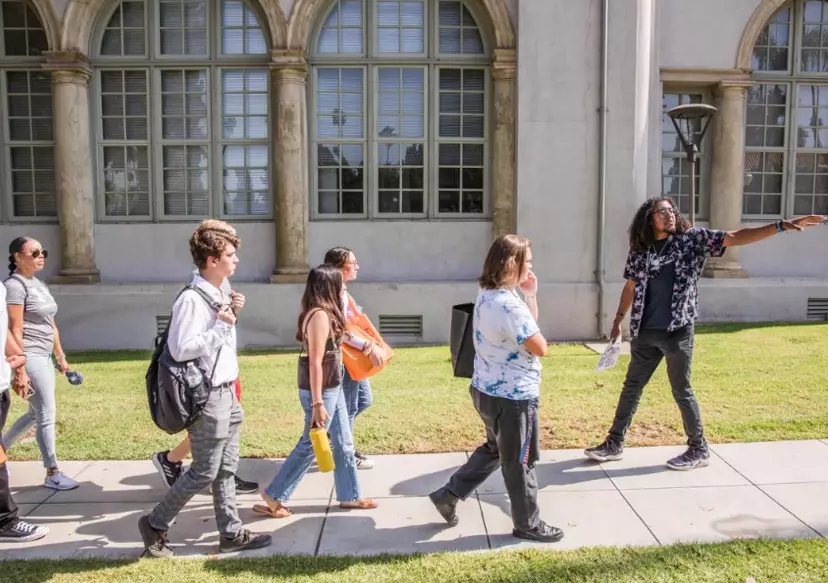
| Place to Observe | What to Look For (The Surface Level) | What It Really Tells You (The Deep Meaning) |
|---|---|---|
| Academic Buildings | Newness of equipment, classroom technology, lab spaces. | Institutional investment in education. Are the history department offices in a basement while the business school has a new glass atrium? That speaks to funding priorities. |
| Student Union / Commons | How many students are there? What are they doing? | The social heartbeat of the school. Are people in groups talking, playing games, studying together? Or is it empty? This indicates community and how students spend downtime. |
| Dormitory (if shown) | Size, furniture, cleanliness, common room amenities. | How the college values student living. A cramped, dimly-lit dorm with broken furniture suggests residence life is an afterthought. Look for personalization on doors – it shows students feel at home. |
| The Library | Noise levels, study carrel availability, group study rooms. | The academic culture. A dead-silent library might indicate high pressure. A busy but collaborative one shows serious students who work together. Check if it's 24/7 during exams. |
| Surrounding Area | Walk 2-3 blocks off campus. What businesses do you see? | Your off-campus life. Is it all fast food and banks, or are there bookstores, cafes, and parks? This is your weekend and your grocery run. |
One thing most people ignore? The bulletin boards. Seriously. Scan them in the student union and academic buildings. They are a raw feed of campus life: club meetings, roommate searches, mental health workshops, off-campus job postings, concert flyers. It's the unfiltered curriculum of student interests.
Questions to Ask That Go Beyond the Script
Your tour guide is a goldmine, but they're trained. Ask questions that get them off-script and into their real experience.
To Your Tour Guide (a current student):
- "What's one thing you wish you knew about this school before you arrived?"
- "Tell me about a time you used an academic support service (like tutoring or writing help). Was it easy to access?"
- "Where do you go when you need a break from campus?"
- "What does a typical Thursday night look like for you and your friends?"
If You Meet a Professor or Department Rep:
- "What opportunities exist for freshmen to get involved in research or projects in this department?"
- "How do students in this major typically find internships, and what support does the department provide?"
Don't just ask about the best things. Ask about the challenges. "What's the biggest complaint students have?" can yield surprisingly honest answers about food, housing, or administrative red tape.
Common Campus Tour Mistakes (And How to Avoid Them)
I've seen these errors derail countless visits.
Mistake 1: Only Seeing the Showcase Route. The tour shows the new science center and the renovated dorm. It avoids the older humanities building and the crowded dining hall at peak time. Solution: Break away politely after the tour. Go find those other places.
Mistake 2: Judging by the Weather (or Your Guide). A sunny day makes any campus look idyllic. A grumpy guide can color your perception. Solution: Consciously separate transient factors from permanent ones. Focus on the infrastructure and the students you see, not just the presentation.
Mistake 3: Not Talking to Random Students. This is the biggest missed opportunity. Solution: Be brave. Approach a student sitting on a bench or at a cafe. Say, "Hi, I'm a prospective student. Mind if I ask what you like most and least about going to school here?" Most are happy to share for a minute. This raw data is priceless.
Mistake 4: Ignoring Logistics. Where is the nearest real grocery store? How reliable is the campus shuttle? Where do you do laundry? These mundane details define daily life. Solution: Actually find the laundry room in a dorm. Look up the bus schedule on your phone.
When You Can't Visit: Finding Meaning in Virtual Tours
Can't travel? A virtual visit's meaning shifts from gut-feel to focused investigation.
Start with the official virtual tour, but treat it as a baseline. Then, go digging.
- YouTube is Your Best Friend: Search "[College Name] dorm tour," "[College Name] a day in the life," "[College Name] campus walk." Student-created content is unvarnished and shows you the real spaces.
- Leverage Social Media: Look at the college's Instagram, but more importantly, look at location tags and student-run accounts. See what events they're posting about.
- Attend a Live Virtual Session: Many schools offer these. The key is to ask questions in the chat. The interaction is the value.
- Use Google Maps Street View: Seriously. "Walk" from a dorm to a classroom building. "Walk" off campus. It gives you a spatial sense no video can.
The goal of a virtual deep-dive is to gather so much specific information that you can almost picture yourself there. It's a different path to the same destination: informed confidence.
Your Campus Tour Questions Answered
What should I do if I can't visit a campus in person?
A virtual tour is your best starting point, but don't stop there. Go beyond the official 360-degree video. Search for 'day in the life' videos from current students on YouTube. Use Google Street View to walk the surrounding neighborhood. Then, get interactive. Many admissions offices host live virtual Q&A sessions. Sign up and ask specific questions about dorm life or academic support. Follow the college's social media accounts, especially student-run ones, for an unfiltered vibe. Finally, if possible, connect with a current student from your intended major for a 15-minute video chat. That raw perspective is often more valuable than any polished tour.
How can I tell if a college's culture is the right fit for me during a tour?
Forget the admissions officer's script. Culture shows up in the spaces between buildings. Arrive 30 minutes early and just sit in the student union or main library. Watch how students interact. Are they in loud groups or studying quietly alone? Listen to their conversations. Check the bulletin boards – are they plastered with research symposium flyers or club soccer tryouts? During your tour, ask your guide, 'What do people do on a typical Wednesday night?' The answer reveals more about social life than any brochure. Also, note the condition of common areas and classrooms. Well-worn but cared-for furniture often indicates a comfortable, lived-in community, while pristine, untouched spaces might feel less communal.
What's the one question most students forget to ask on a campus tour?
Almost everyone asks about class size and professor access. Few ask about what happens after office hours. Try this: 'Can you tell me about the most helpful academic support resource you've used that isn't your professor?' This uncovers the hidden infrastructure – writing centers, peer tutoring networks, dedicated major advisors. Another missed angle is career support for first-years. Ask: 'What kind of career planning or internship help is available to students before they declare a major?' The answer tells you if the college invests in early professional development or if it's reserved for upperclassmen. These questions shift the focus from inputs to outcomes.
Is it worth touring a campus I'm only mildly interested in?
Absolutely, but reframe the goal. Don't tour it to confirm your interest; tour it to establish a baseline. Use this visit to calibrate your 'feel' meter. What does a large lecture hall actually feel like versus a small seminar room you saw elsewhere? How does the energy of a suburban campus compare to an urban one? This 'control' visit makes your reactions at your top-choice schools more meaningful. You'll have a concrete comparison point. You might even discover that a factor you thought was minor, like the layout of the science buildings or the availability of late-night food, becomes a major deciding point. Sometimes, knowing what you don't want is as powerful as knowing what you do.
So, what is the ultimate meaning of a campus tour? It's the process of transforming a name on a list into a tangible, multi-sensory reality. It's about collecting the small, telling details—the hum of the library, the smell of the dining hall, the ease of a conversation with a stranger on the quad—that your brain will subconsciously weigh when making a final choice. It's your chance to move from wondering if you can get in, to deciding if you truly belong.
Don't just take the tour. Own it. Use it as your most powerful tool for one of life's biggest decisions.
Leave a Comment