Let's be honest. Most time management advice for students feels like it was written by a robot that never pulled an all-nighter. "Just use a planner!" "Prioritize!" It's not wrong, but it's not the whole story. The real challenge isn't knowing what to do; it's doing it when you're tired, distracted, and have three deadlines screaming at you.
I remember my own first semester. I had a color-coded schedule that looked like a military operation. It lasted a week. The problem wasn't the plan—it was the planner. Me. I didn't account for energy slumps, the siren call of social media, or just how long a 20-page reading actually takes.
This guide is different. We're going beyond the basics. We'll build a system that bends with your life, fights procrastination on its own turf, and leaves room for you to actually breathe.
Your Quick Navigation Guide
The Mindset Shift: Time Management Isn't About Control
Here's the non-consensus view: Effective time management for students is less about controlling every minute and more about managing your energy and attention. You are not a machine. A 9 AM lecture after four hours of sleep is not the same as one after eight hours. A study session when you're anxious about a personal issue is worthless.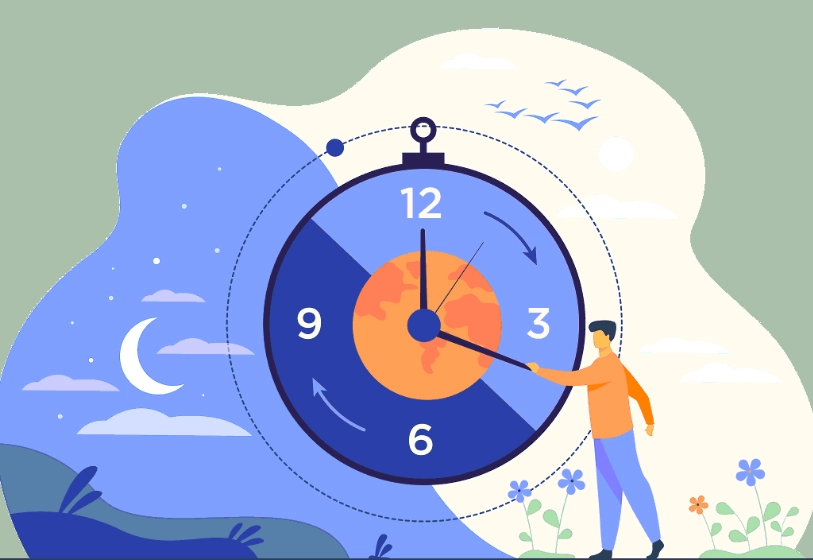
The first step is to audit your energy, not just your time.
- When are you sharpest? For me, it's 10 AM to 1 PM. That's when I tackle complex problem sets or writing. My afternoons? Sluggish. That's for administrative tasks—email, formatting papers, organizing notes.
- What drains you? Is it back-to-back classes? Large social gatherings? Identify these energy sinks and, if possible, don't schedule demanding mental work right after them. Give yourself a buffer.
- Accept the 80/20 rule. In your academics, 80% of your results often come from 20% of the work—the core concepts, the key practice problems, the thesis of your essay. Find that 20% and defend time for it fiercely. The other 80% (perfect formatting, exhaustive but unnecessary reading) can often be streamlined or skipped.
Building Your Practical System: Tools & Tactics
Now, let's get tactical. You need a system that works both on paper and in the chaos of real life.
The Two-Calendar Method
Don't use one calendar for everything. It becomes a mess.
Calendar 1: The Fixed Map (Google Calendar/iCal). This is for immovable objects: class times, work shifts, club meetings, doctor appointments. It's your skeleton.
Calendar 2: The Flexible Plan (A Physical Planner or App like Notion/Todoist). This is for everything else: "Study for Bio Midterm," "Start History Essay," "Laundry." This is where you assign time to tasks from your to-do list, but you can move these blocks around as needed. The key? You time-block everything. "Study for Bio" becomes "Bio Review: 2 PM - 4 PM in Library."
Toolkit Breakdown: Digital vs. Analog
There's no best tool, only the best tool for you. Some students need the tactile feel of paper; others need digital reminders. Here’s a no-nonsense comparison.
| Tool Type | Best For | Watch Out For | My Personal Pick |
|---|---|---|---|
| Digital Planner (Notion, Todoist) | Students who love customization, need access everywhere, and have lots of project-based work. | You can spend more time building the "perfect" system than actually using it. It's a trap. | Notion, but I keep it brutally simple: one master to-do list and a weekly template. |
| Classic Paper Planner | Kinesthetic learners, those easily distracted by screens, and anyone who remembers things better by writing. | It's not with you when you need it (left in your dorm). Hard to adjust if plans change drastically. | A simple weekly Moleskine. No fancy stickers, just pen. |
| Basic Notes App + Google Calendar | Anyone overwhelmed by complex systems. The minimalist approach. | Can become disorganized if you don't have a clear naming convention for notes. | This is what I actually use most days. Apple Notes for lists, Google Calendar for time. |
Fixing Procrastination (For Real This Time)
"Just do it" is useless advice. Procrastination is an emotional regulation problem, not a time management one. You're avoiding a task because it makes you feel anxious, bored, or incompetent.
The trick is to make starting so stupidly easy you can't say no.
The 5-Minute Crumble: Tell yourself you'll only work on the dreaded task for five minutes. Set a timer. Often, starting is the only hard part. Once you're five minutes in, momentum can carry you forward. If not, you've at least done five minutes.
Reduce Friction: Why do we scroll Instagram? It's a one-click action. Make your desired behavior just as easy. The night before, open the textbook to the right page, open the Word document, lay out your notes. When you sit down, the barrier to starting is lower.
Pairing: Link a task you avoid with something you enjoy. "I'll only listen to my favorite podcast while I clean my room/do laundry." "I'll get that fancy coffee and drink it only while I outline my paper."
A Realistic Case Study: Mapping a Hell Week
Let's apply this to a classic student nightmare: a week with two midterms and a paper draft due.
Meet Alex, a sophomore with a Bio midterm on Friday, a History midterm on Wednesday, and a 5-page Philosophy draft due Thursday.
Friday (The Week Before): Alex does a brain dump. All tasks are listed. They then backward plan. Philosophy draft due Thursday means a complete draft needs to be done by Wednesday night. That means research should be done by Monday, outline by Tuesday. History midterm Wednesday means Monday and Tuesday are for active review (practice essays, flashcards). Bio midterm Friday means reviewing starts Monday, intensifies Thursday.
Instead of writing "Study History," Alex blocks time:
Monday 4-5:30 PM: Create History essay outlines for three potential prompts.
Tuesday 10-11:30 AM: Philosophy paper outline.
Tuesday 3-4:30 PM: History practice essay (timed).
See the difference? Specific, time-bound, and action-oriented. Alex also blocks 30-60 minutes of flex time each afternoon for overflow or unexpected tasks. Friday night? Absolutely nothing academic is scheduled. It's a guaranteed reward.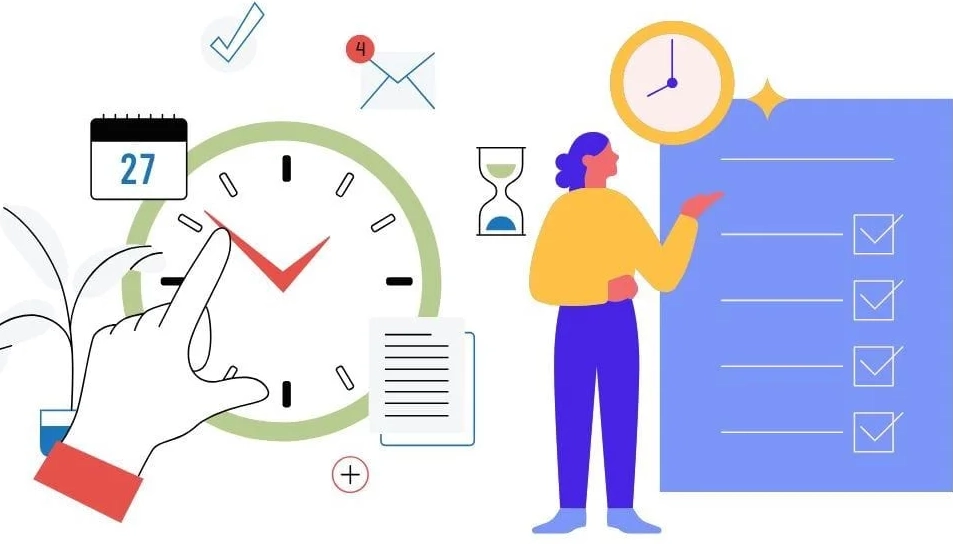
Your Burning Questions, Answered
The bottom line is this. Good student time management isn't about being a productivity robot. It's about creating a structure flexible enough to handle chaos, smart enough to work with your human brain, and resilient enough to keep you moving forward even when you don't feel like it. Start small, be kind to yourself when the plan goes sideways (it will), and keep tweaking the system until it feels less like a cage and more like a set of training wheels keeping you upright.
Reader Comments