Ask anyone about the top liberal arts colleges, and you'll likely get a list pulled straight from U.S. News. But here's the thing those lists often miss: the rankings shift a bit every year, but the core group of elite schools remains remarkably stable. The real value isn't in memorizing an order; it's in understanding what makes each place tick, who thrives there, and how to see past the prestige to find your match.
I've talked to dozens of students and counselors over the years. The biggest mistake I see? Choosing a school because it's "#3" instead of "#7," ignoring the massive differences in campus culture, location, and academic vibe.
Navigate This Guide
The Definitive Top 10 List (2024 Perspective)
Let's get to it. This table synthesizes the latest consensus from major rankings like U.S. News & World Report, Forbes, and Niche, but weights them with factors that actually matter to students: student satisfaction, career outcomes, and that elusive "fit" factor.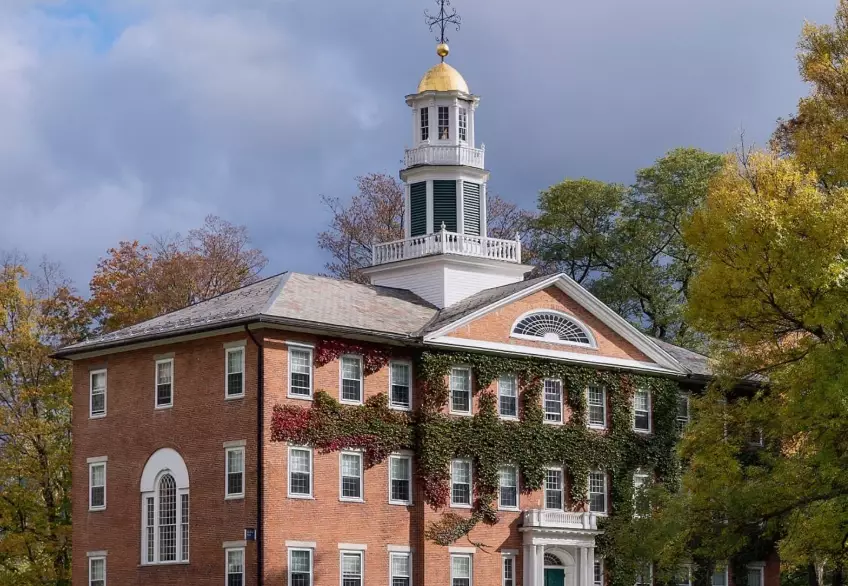
| Rank | College | Location | Undergrads | Notable For | The Vibe (Unofficial) |
|---|---|---|---|---|---|
| 1 | Williams College | Williamstown, MA | ~2,000 | Economics, Political Science, Tutorial System | Rugged, scholarly, traditional. The "Oxbridge" of the U.S., set in the mountains. |
| 2 | Amherst College | Amherst, MA | ~1,850 | Open Curriculum, STEM, Economics | Intellectually intense, collaborative, no core requirements means high student agency. |
| 3 | Swarthmore College | Swarthmore, PA | ~1,700 | Engineering, Computer Science, Social Sciences | Quaker roots, socially conscious, combines liberal arts rigor with an engineering program. |
| 4 | Pomona College | Claremont, CA | ~1,700 | Neuroscience, Public Policy, Media Studies | Sunny, laid-back Californian intellect. Access to 5 Claremont Colleges. |
| 5 | Wellesley College | Wellesley, MA | ~2,500 | Economics, Computer Science, Political Science | Empowering, historic women's college. Massive alum network (Hillary Clinton is an alum). |
| 6 | Bowdoin College | Brunswick, ME | ~1,900 | Government & Legal Studies, Environmental Sci, Arctic Studies | Outdoorsy, friendly, exceptional food. A strong sense of community in coastal Maine. |
| 7 | Carleton College | Northfield, MN | ~2,000 | STEM (especially Physics & Bio), Political Economy | Unpretentiously brilliant, quirky, collaborative. Cold winters, warm community. |
| 8 | Middlebury College | Middlebury, VT | ~2,850 | Languages, Environmental Studies, International Studies | Global, outdoors-focused, owns its own language schools abroad. |
| 9 | Claremont McKenna College | Claremont, CA | ~1,400 | Economics, Government, International Relations | Pre-professional, leadership-oriented. Strong ties to finance, gov, and consulting. |
| 10 | Davidson College | Davidson, NC | ~1,900 | Biology, Political Science, Pre-Health | Southern charm, honor code, D1 athletics. Strong pre-med and pre-law support. |
You'll notice I didn't include a "U.S. News Rank" column. Why? Because the difference between #4 and #6 is statistically meaningless. A student who thrives at Bowdoin (#6) might be miserable at Swarthmore (#3). The location alone—rural Maine vs. suburban Philly—is a life-changing difference.
Spotlight on Two You Might Misjudge
Carleton College gets overlooked for being in Minnesota. Big mistake. Their science facilities rival small research universities, and their graduates have one of the highest PhD attainment rates in the country. It's for students who genuinely love learning for its own sake.
Claremont McKenna (CMC) is often pigeonholed as just a finance feeder. That's part of it, but their government and philosophy departments are top-notch. The vibe is less "ivory tower" and more "let's solve real-world problems." If you're debate team captain and student council president, look here.
How to Use This List (Beyond the Numbers)
So you have the names. Now what? Treat this list as a starting point for deep research, not a final answer.
First, cluster by feel, not rank. Group schools with similar environments:
- The Rural Scholars: Williams, Bowdoin, Carleton, Middlebury. Isolated locations foster tight-knit communities. Do you mind driving 30 minutes to see a movie?
- The Consortium Crew: Pomona, Claremont McKenna, Swarthmore (to a degree with nearby Univ of Penn). You get a small college feel with access to more classmates, courses, and social events across multiple campuses.
- The New England Classics: Amherst, Wellesley, Williams. Steeped in tradition, close to Boston/NYC. The "classic" liberal arts experience.
Second, dig into the curriculum structure. This is huge.
- Amherst's Open Curriculum means no required courses. Total freedom. Amazing for the self-directed, paralyzing for those who need structure.
- Williams' Tutorials are like Oxford-style one-on-one or two-on-one courses. Incredibly intense and rewarding.
- Most others, like Swarthmore or Davidson, have a distribution requirement system—you must take courses across various fields. Less flexible, but ensures breadth.
Finally, stalk the career center websites. Don't just look at "placement rate." See which companies recruit on campus. CMC's website lists investment banks and consulting firms. Carleton's highlights fellowships and grad school acceptances. The path is different.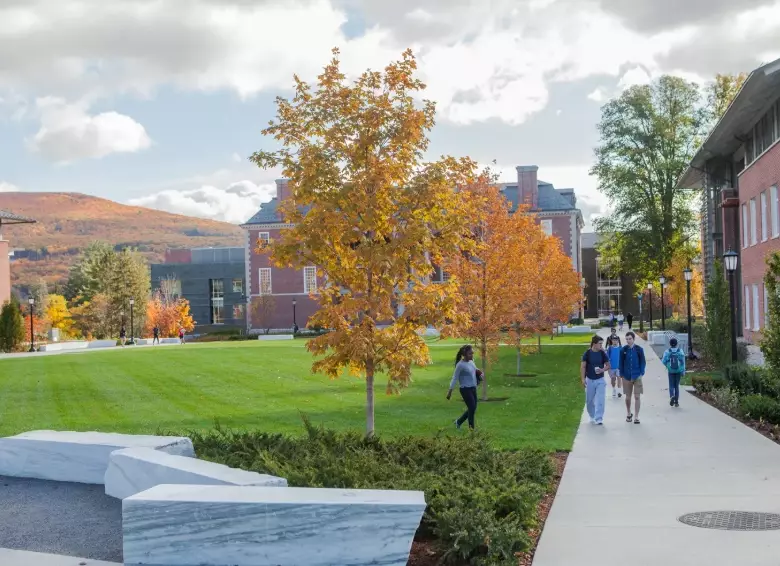
Pro Tip from a Former Admissions Reader: When you write your "Why This College?" essay, mentioning the ranking is the fastest way to sound generic. Instead, talk about a specific professor's research, a unique interdisciplinary major (like Middlebury's "Science & Society"), or how you'd use the college's consortium system. That shows real depth.
Common Pitfalls When Choosing a Liberal Arts College
I've seen smart students make these errors repeatedly.
Pitfall 1: Assuming "Undecided" is the best approach. At a liberal arts college, being undecided is fine. But having a direction—even if it changes—helps you evaluate strengths. If you have a passing interest in environmental science, note that Bowdoin and Middlebury have entire institutes dedicated to it, while at others it might just be a department.
Pitfall 2: Ignoring the financial aid policy. This is critical. Most of these top schools are need-blind for U.S. students and meet 100% of demonstrated need. But how they meet it varies. Some, like Davidson and Amherst, have no-loan policies, replacing loans with grants. Others may include modest loans in packages. Run the Net Price Calculator on every single website—it's the most important 10 minutes you'll spend.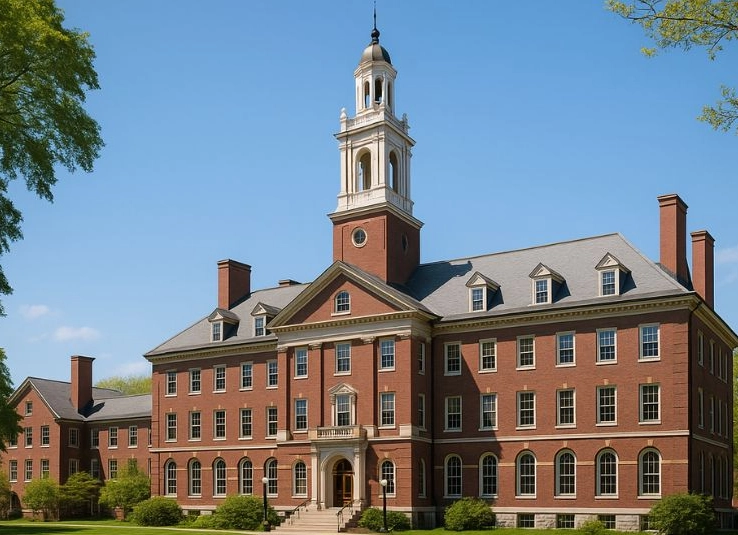
Pitfall 3: Overvaluing prestige for graduate school. A pre-med student once told me they had to go to a "top 5" school to get into med school. Not true. Medical schools care about GPA, MCAT scores, and letters of recommendation from professors who know you well. A high GPA and strong relationships at a Carleton or Davidson will beat a mediocre performance at a more "prestigious" school every time. The same logic applies to law school and PhD programs.
The weather matters more than people admit. A student from Florida rarely lasts four happy years in rural Minnesota without serious consideration.
Your Questions, Answered by an Advisor
If the rankings change every year, is the #10 school really worse than the #1 school?
No, not in any meaningful educational sense. The ranking algorithms tweak weightings for factors like class size, faculty resources, or alumni giving. A school might drop a few spots because its acceptance rate went up (which could actually mean it's focusing on access) or because of statistical noise. The difference in quality between #1 Williams and #10 Davidson is negligible; the difference in experience is vast. Focus on fit, not the digit.
I'm interested in tech. Aren't all these liberal arts colleges weak for computer science compared to big engineering schools?
This is a major misconception. Swarthmore has a renowned engineering department. Pomona and Carleton have strong CS programs with a focus on theory and ethics that tech companies are increasingly seeking. Wellesley's computer science grads are heavily recruited. The advantage? You learn to code and communicate, think about ethics, and understand the societal impact of technology. You won't get the massive, thousand-person research labs of MIT, but you will get direct access to professors and close-knit project teams.
How important is the "vibe" or campus culture I read about online?
It's everything. It's the difference between enjoying your four years and enduring them. The "vibe" is shorthand for: Are students collaborative or competitive? Is social life centered on parties, clubs, or the outdoors? Is the campus politically active or more laid-back? You can't change a culture. The best way to gauge it is through an overnight visit if possible, or by scouring student newspapers and YouTube vlogs, not the official marketing materials.
My parents are worried about the return on investment. Are these colleges worth the high sticker price?
This is a valid concern. The key is to separate the sticker price from the net price you'll actually pay. The top liberal arts colleges have the largest endowments per student, which they use for generous financial aid. Many families earning under $150,000 pay significantly less than the full tuition. In terms of ROI, look at long-term outcomes: these colleges disproportionately produce leaders, PhDs, and professionals. The small classes, alumni network, and critical thinking skills are the product you're buying. Compare the net price after aid to the net price of your state flagship—the gap often shrinks or disappears.
I think I want to go to grad school. Which of these top 10 schools is best for that path?
All of them are excellent feeders for graduate programs because of the emphasis on research, writing, and faculty mentorship. However, some have particular strengths. Carleton and Reed (just outside the top 10) are famous for their PhD placement rates. Williams' tutorial system is essentially graduate-level training. For pre-med, look at schools with strong advising and a track record of placements—Davidson, Bowdoin, and Amherst are all standouts. The common thread is building close relationships with professors who can write you powerful, detailed letters of recommendation.
Is it possible to transfer into one of these top liberal arts colleges if I don't get in as a freshman?
It's possible but very difficult. Transfer acceptance rates are often lower than freshman rates because very few spots open up. Schools like Williams and Amherst may only take a handful of transfers each year. If this is your goal, excel at your current college, build a compelling narrative for why you need to transfer (it can't just be "prestige"), and understand it's a long shot. A more reliable path is to look into 3-2 engineering programs or graduate school linkages later on.
The search for the top liberal arts colleges isn't about finding the "best" one. It's about finding the best one for you. Use the list to narrow your focus, then look past the rankings to the realities of daily life, academic structure, and post-graduate paths. The right fit will feel less like a trophy and more like a home where you can grow.
Leave a Comment