Let's cut straight to the point. Transferring from a California community college to a University of California campus is one of the smartest educational and financial moves you can make. The pathway is designed, supported, and has a high success rate—if you know the rules of the game. But here's the thing most generic guides miss: the "requirements" aren't just a checklist. They're a strategic blueprint. Following them mindlessly can get you eligible, but understanding them gets you admitted to your dream campus and major. I've seen too many students with perfect GPAs get passed over because they treated the process like filling out a form, not building a compelling academic profile.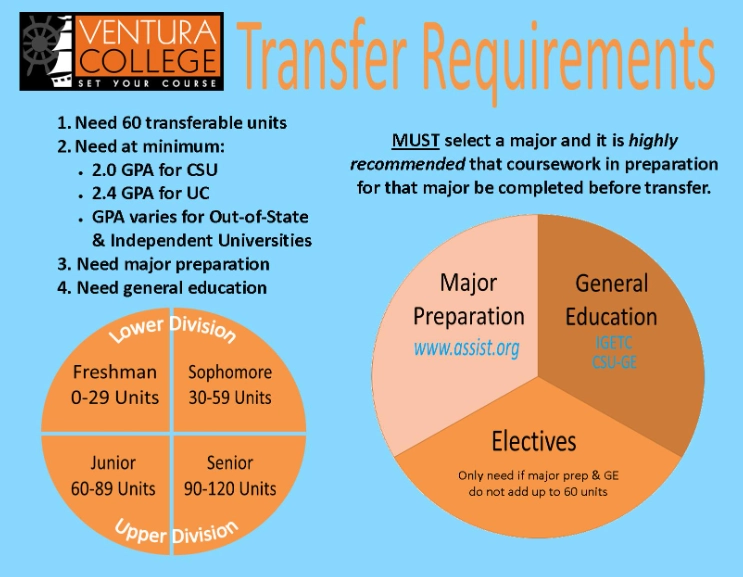
What You'll Find in This Guide
- The Non-Negotiable Core: GPA, Units, and Course Patterns
- How to Plan Your Community College Courses for UC Success
- Your Transfer Timeline: From Day One to Application Deadline
- What Gets You In: Moving Beyond the Basic Checklist
- The TAG Program: Your Golden Ticket (With Fine Print)
- Your Burning Transfer Questions, Answered
The Non-Negotiable Core: GPA, Units, and Course Patterns
First, the foundational stuff you absolutely must get right. Think of this as your transfer eligibility floor.
Minimum GPA: You need a 2.4 GPA in all UC-transferable coursework to be considered for California residents. For non-residents, it's a 2.8. Stop right there. The word "minimum" is a trap. For most impacted majors at popular campuses like UCLA, Berkeley, UCSD, or UCSB, the competitive GPA is a whole different ball game. We're talking 3.5 to 3.8 and above for computer science, engineering, biology, or economics. The UC's own admission profiles show the middle 25%-75% GPA range of admitted transfers. That's your real target.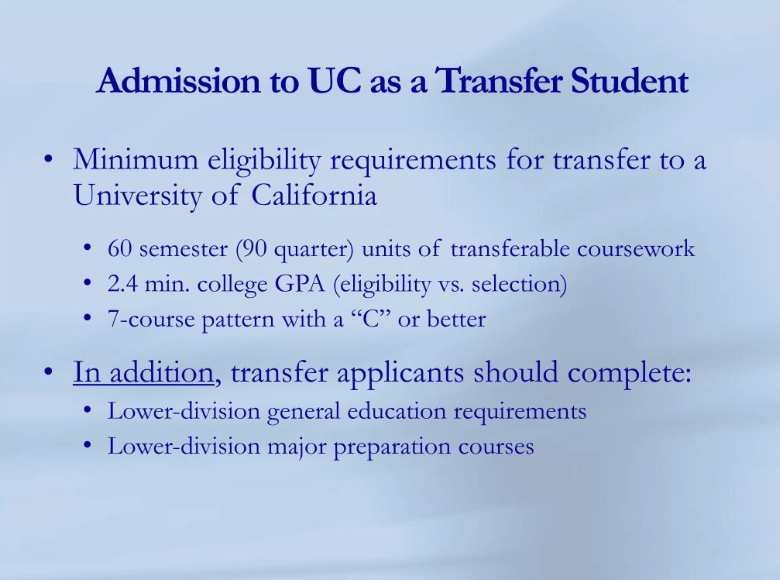
Pro Tip: Your GPA for UC transfer is calculated differently than your college GPA. It only includes UC-transferable courses (usually numbered 1-99) from regionally accredited institutions. It also includes grades from every college you've ever attended—they all get combined into one UC GPA. That one D from a random class five years ago counts.
Unit Requirements: You must complete 60 semester (or 90 quarter) units of UC-transferable credit by the end of the spring term before you transfer. But here's the nuance everyone overlooks: at least 30 of those semester units need to be general education and major preparation courses completed at a California community college. This is why starting at a CCC is such an advantage.
The Golden Course Pattern: This is your bread and butter. You must complete the Seven-Course Pattern with a grade of C or better in each:
- Two transferable courses in English composition
- One transferable course in mathematical concepts and quantitative reasoning
- Four transferable college courses chosen from at least two of these areas: arts and humanities, social and behavioral sciences, physical and biological sciences.
How to Plan Your Community College Courses for UC Success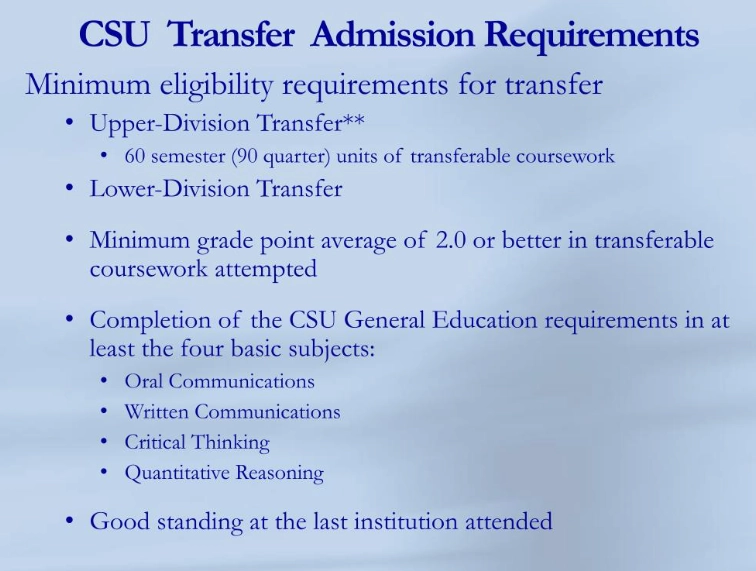
This is where strategy separates the hopeful from the admitted. You have two main frameworks to work within: IGETC and Major Preparation. A common, costly mistake is focusing solely on one.
IGETC: The General Education Blueprint
The Intersegmental General Education Transfer Curriculum (IGETC) is a series of courses that satisfy the lower-division general education requirements at both UCs and CSUs. Completing it with a C or better in each course (and maintaining the required GPA) means you start at the UC as a junior, with all your GE boxes checked.
Critical Warning: IGETC is NOT required for transfer. For some STEM majors, chasing the full IGETC certificate can be a disastrous waste of time and units because your major prep courses are heavier. Always, always check the ASSIST.org agreement for your specific major and UC campus first. For an engineering major, the physics and math series are your priority, not an art history class to complete IGETC Area 3.
Major Preparation: The Most Important Part of Your Application
Your intended major's preparation courses are the single biggest factor in admission decisions for impacted programs. The UC campuses publish these requirements clearly. Use ASSIST.org religiously. It's the official database that shows exactly which courses at your community college articulate to required courses at your target UC.
Let's take a real example. Suppose "Alex" wants to transfer to UCLA as a Communications major. On ASSIST, selecting his community college and UCLA reveals that beyond the basic requirements, UCLA strongly recommends (which is admissions code for "you really should do this") courses in statistics, introductory psychology, sociology, and micro/macro economics before transfer. Alex who completes these has a vastly stronger application than Sam who just has the bare minimum.
Your Transfer Timeline: From Day One to Application Deadline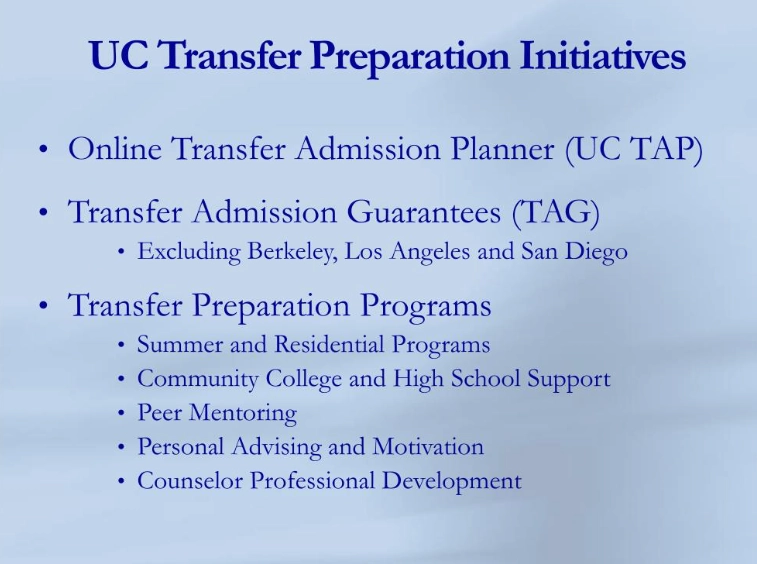
Procrastination is the enemy of a successful transfer. Here's a realistic, semester-by-semester plan.
Semester 1 & 2 (Freshman Year): Meet with a counselor immediately. Declare a major intent (it can change). Start knocking out your Seven-Course Pattern and begin the English/math sequences. Explore major prep intro courses. Aim for a 3.5+ GPA from the start—it's easier to maintain than to climb out of a hole.
Semester 3 & 4 (Sophomore Year): This is your core execution phase. Complete the bulk of your major prep courses. If you're doing IGETC, finish it. Start researching UC campuses and majors in depth—attend transfer fairs. If you're considering the TAG program (more on that next), you need to be preparing for that application in your 4th semester.
The Application Season (Fall of Your Second Year):
- August 1: UC Application opens.
- September 1-30: TAG application filing period (for fall admission the following year).
- October 1-November 30: UC application filing period for all campuses.
- January-February: Update your grades (Academic Update period) for fall semester courses.
- March-April: Admission decisions roll out.
- May 1: Intent to Register (SIR) deadline for most campuses.
What Gets You In: Moving Beyond the Basic Checklist
Meeting requirements makes you eligible. Being compelling makes you admitted. The Personal Insight Questions (PIQs) are your chance to explain your story. Don't write what you think they want to hear. Write about the specific challenges of being a community college student—balancing work, maybe family responsibilities, navigating a system with less hand-holding. Explain why your chosen major is the logical next step from the courses you've taken and the experiences you've had.
Extracurriculars matter, but differently. Leadership in a campus club, a relevant part-time job, an internship, or significant family responsibilities all count. Quality and depth of involvement trump a long list.
The TAG Program: Your Golden Ticket (With Fine Print)
The Transfer Admission Guarantee (TAG) is a phenomenal program that offers a guaranteed admission offer from one UC campus (except Berkeley, UCLA, and UCSD) if you meet all its specific, contractual requirements. It's a huge stress reliever.
But it's not automatic, and the requirements are stricter than general admission. You must apply for TAG in the fall, a full year before you plan to transfer. Each campus and major has its own TAG criteria, often including a higher GPA and completion of specific major prep courses by the end of the fall term prior to transfer.
| UC Campus (with TAG) | Example Major-Specific TAG GPA Requirement* | Key Fine Print Note |
|---|---|---|
| UC Davis | 3.2 for Economics; 3.5 for Computer Science | Must complete Calculus I & II, and two programming courses with a B by fall prior to transfer for CS. |
| UC Irvine | 3.4 for Business Admin; 3.0 for Psychology | Many popular majors are not available for TAG. Check the current matrix. |
| UC Santa Barbara | 3.4 for Sociology; 3.2 for Environmental Studies | Requires completion of 30 semester units of UC-transferable credit by the end of the summer before applying for TAG. |
| UC Santa Cruz | 3.0 for most majors | One of the more accessible TAG programs, but still requires major prep progress. |
| UC Riverside | 3.0 for most majors | Offers TAG for the most majors and is generally the most flexible. |
| UC Merced | 2.8 for most majors | Has the lowest GPA thresholds, a great option for many students. |
*GPA requirements are examples and can change yearly. Always consult the official UC TAG website for the current agreement.
My advice? Apply for a TAG to a realistic "safety" campus that you'd be happy to attend. Then, still shoot your shot with applications to your reach schools (like UCLA, Berkeley) in the general application. This way, you have a guaranteed spot secured while aiming higher.
Your Burning Transfer Questions, Answered
If my GPA in my first year at community college is low, can I still recover and transfer to a good UC?
You can, but it requires a clear plan. The UC application asks for grades from every college attended, so that first-year GPA will be part of your cumulative record. However, a strong, consistent upward trend—earning all As and Bs in your subsequent semesters, especially in major prep courses—tells a powerful story of growth and maturity. You'll need to address this trend positively in your Personal Insight Questions. Focus on what changed: better study habits, finding your academic passion, overcoming a personal challenge. A 2.8 freshman year followed by a 3.7 sophomore year in difficult courses is more impressive than a flat 3.3.
Is the IGETC certificate absolutely mandatory for UC transfer?
No, and this misconception derails many STEM students. IGETC is for general education. If you're majoring in Physics, Computer Science, or Engineering, your priority is completing multi-course sequences in calculus, physics, chemistry, and programming. These courses take up most of your unit load. Forcing in extra GE courses to complete IGETC might delay your transfer or hurt your GPA in core major prep. Many STEM transfers are admitted without IGETC and finish their remaining 1-2 GE courses at the UC. Check your major's recommendation on ASSIST—it will say "IGETC recommended" or "Major Preparation is recommended over IGETC."
How important are letters of recommendation for the UC transfer application?
The UC application does not ask for or accept letters of recommendation during the initial review for most applicants. They are only requested later, selectively, for some applicants as part of a supplemental review. Therefore, you cannot rely on letters to compensate for weaknesses in your GPA or course pattern. Your entire strategy should be built on the visible, quantifiable parts of your application: grades, courses completed, and your written PIQ responses. That said, build strong relationships with professors in your major—you may need them for scholarships or if a letter is requested.
What's the biggest mistake you see transfer applicants make with their course selection?
The "shotgun" approach. Students take a random assortment of courses that seem interesting or easy to pad their unit count, neglecting the coherent narrative of their academic preparation. Every course on your transcript should have a purpose: fulfilling the Seven-Course Pattern, progressing toward IGETC, or (most importantly) building a logical sequence toward your major. An admissions officer looking at a political science applicant wants to see courses in history, political theory, economics, and statistics—not just a high GPA built on ceramics, intro to film, and personal fitness. Coherence demonstrates intent and preparation.
Reader Comments